
What Should Be Included on a Small Business Website?
A small business website should do more than simply explain who you are. It should help potential customers understand what you offer, why they should trust you and what they need to do next.
For many businesses, the website is one of the first places a potential customer will visit before making contact. That means the structure, content and usability all matter.
Here are the key elements every small business website should include.
A Clear Homepage
Your homepage should quickly explain:
- What your business does
- Who you help
- Where you operate
- What makes you different
- What visitors should do next
People should not have to search around the site to understand your business.
A strong homepage should guide visitors towards your main services, contact information and the next logical step.
Dedicated Service Pages
One of the most common mistakes small businesses make is putting every service onto one general page.
Dedicated service pages are usually much more useful.
They allow you to explain each service properly, answer relevant questions and target more specific searches.
For example, a digital marketing company may have separate pages for:
- Website design
- SEO
- Social media management
- Website maintenance
- Hosting
- Printing
This also makes the website easier for search engines and AI-powered search tools to understand.
Each important service should have its own clear page wherever possible.
A Strong About Page
Customers want to know who they are dealing with.
Your About page should explain your experience, background and approach without becoming a long company history.
Useful information might include:
- How long you have been established
- Who is behind the business
- Your experience
- The type of customers you work with
- Your values
- Why customers choose you
For local businesses in particular, showing that there are real people behind the company can help build trust.
Clear Contact Information
Your contact details should be easy to find.
Include the most appropriate ways for customers to contact you, such as:
- Telephone number
- Email address
- Contact form
- Business address where relevant
- Opening hours
- Links to social media profiles
It is also worth including contact options throughout the website rather than expecting visitors to find a single Contact page.
Calls to Action
Every important page should make it clear what you want visitors to do next.
That could be:
- Request a quote
- Call the business
- Send an enquiry
- Book an appointment
- Buy a product
- Download information
- Visit a showroom
A website can have plenty of traffic but still produce very few enquiries if visitors are not given a clear next step.
Customer Reviews and Testimonials
Reviews provide reassurance that other people have already used your business and had a positive experience.
They can be particularly valuable on:
- The homepage
- Service pages
- Contact pages
- Landing pages
Where possible, use genuine reviews and include the customer’s name or company where permission has been given.
Linking visitors to your Google reviews can also provide additional reassurance.
Examples of Your Work
Potential customers often want to see evidence before making contact.
Depending on the type of business, this could include:
- Case studies
- Portfolio examples
- Before and after photographs
- Completed projects
- Customer results
- Project galleries
For service businesses, case studies can be particularly useful because they explain not only what you did, but the problem you were helping the customer solve.
Local Information
If your business serves a particular area, make that clear.
Your website should naturally mention the towns, areas or regions you serve.
For businesses targeting several locations, dedicated local landing pages can be useful where there is enough unique and relevant information to justify them.
Avoid simply duplicating the same page and changing the town name.
Useful local information can include:
- Areas covered
- Nearby towns
- Local projects
- Customer examples
- Relevant service information
- Frequently asked local questions
This helps customers and search engines understand where your services are available.
Frequently Asked Questions
FAQs are useful because they answer the questions customers commonly ask before making an enquiry.
They can also help search engines and AI search systems understand your services more clearly.
Questions might include:
- How much does the service cost?
- How long does it take?
- What areas do you cover?
- What information do you need from me?
- Is ongoing support available?
- What happens after I make an enquiry?
FAQs should answer genuine customer questions rather than simply being added for SEO purposes.
Mobile-Friendly Design
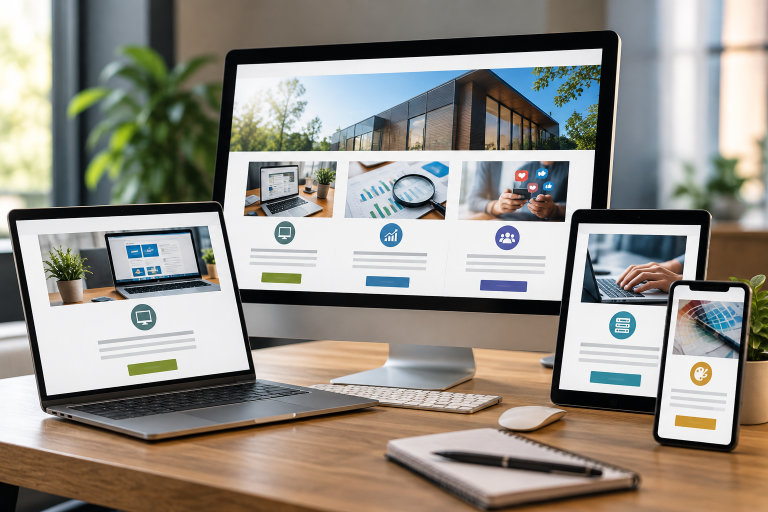
A large proportion of visitors will view your website on a mobile phone.
Your website therefore needs to be easy to use on smaller screens.
That means:
- Clear navigation
- Readable text
- Easy-to-use buttons
- Fast-loading pages
- Simple contact forms
- Images that display correctly
- Telephone numbers that are easy to tap
A website that is frustrating to use on mobile can quickly lose potential customers.
Fast Page Loading
Visitors do not want to wait for a slow website.
Large images, unnecessary plugins, poor hosting and outdated website technology can all affect loading speed.
A faster website creates a better experience and can also support search performance.
Regular website maintenance can help keep WordPress websites updated and running efficiently.
Search Engine Optimisation
SEO should be considered while the website is being built, rather than being added afterwards.
Basic website SEO should include:
- Clear page titles
- Relevant headings
- Useful content
- Internal links
- Mobile-friendly design
- Image optimisation
- Logical URLs
- Strong site structure
A well-built website gives your business a stronger foundation for ongoing SEO.
Content That Answers Real Questions
Search is becoming increasingly conversational.
Instead of searching only for short phrases, customers may now ask questions such as:
- What should a small business website include?
- How many pages does a business website need?
- What makes a website trustworthy?
- Does my business need separate service pages?
- How can my website generate more enquiries?
This means website content should clearly answer the questions potential customers are actually asking.
Useful, well-structured content can improve the experience for visitors while also helping traditional search engines and AI-powered search tools understand your business.
Trust Signals
Customers often make judgements about a business very quickly.
Your website should include trust signals that demonstrate credibility.
These might include:
- Genuine customer reviews
- Case studies
- Years of experience
- Professional memberships
- Accreditations
- Secure website connection
- Clear company information
- Real photographs
- Consistent contact details
The stronger these signals are, the easier it is for a potential customer to feel confident about making contact.
Privacy and Legal Pages
Business websites should also include the appropriate legal and privacy information.
Depending on the website, this may include:
- Privacy Policy
- Cookie Policy
- Terms and Conditions
- Delivery information
- Returns information
The exact requirements will depend on the type of business and how the website operates.
Regularly Updated Content
A website should not simply be launched and forgotten.
Services change, staff change, prices change and customer questions change.
Regularly reviewing your website helps keep the information accurate and useful.
Blog content can also support this by answering more detailed questions and providing useful information around your services.
Does Every Small Business Website Need the Same Pages?
No.
A trades business, restaurant, professional service company and ecommerce store will all have different requirements.
However, most small business websites should include a strong combination of:
- Homepage
- About page
- Individual service pages
- Contact page
- Reviews or testimonials
- Examples of work
- FAQs
- Relevant legal pages
The important thing is that every page has a clear purpose.
Building a Website Around Your Customers
The best small business websites are built around what customers need to know, not simply what the business wants to say.
Your website should answer questions, remove uncertainty, demonstrate credibility and make it easy for visitors to take action.
At Green Tornado, we design websites for businesses that need more than an online brochure. Our websites are built around usability, SEO and generating enquiries, with ongoing hosting, maintenance and digital marketing support available when required.
If you are considering a new website or want to improve an existing one, you can find out more about our website design services.